 Français

Every day, a question repeatedly comes up: What actually ensures an online casino honest, behind the flashy graphics and welcome bonuses? The solution rests in a regulatory framework the majority of players seldom inspect. With Good Man Casino, we believe grasping licensing is the most direct path to separate safe entertainment from unnecessary risk. A casino license is much more than a badge in the footer. It’s a binding legal commitment that obligates the operator to secure your deposits, have every game tested for genuine randomness, and answer to a real regulator if issues arise. Lacking that foundation, even the prettiest platform is little more than a digital house of cards. We aim to provide you the analytical insight you merit—dissecting exactly how licensing works, why it is important on Swiss soil, and what to examine each time you consider placing a bet. Given that when it comes down to it, the licensing is the one promise that carries real weight.
What Makes Casino Licensing Counts for Swiss Players
Switzerland stands in a distinct spot in European gambling. For years, Swiss players used internationally licensed casinos while local rules played catch-up. Today, the Federal Act on Money Games provides us with a modern framework, but the fundamental importance of licensing hasn’t budged. A valid license serves as a shield between you and predatory tactics that can empty your bankroll with no way to fight back. At Good Man Casino, we regard licensing as the number one sign of a responsible operator. It assures that deposits sit in segregated accounts, completely separate from day-to-day business expenses—meaning your money never covers office rent or executive bonuses. In a country that prizes financial privacy and security, a licensed casino must also satisfy strict data protection standards that Swiss players expect. We’ve watched too many players who skip the license check run into delayed withdrawals, unexplained account closures, or worse. Knowing a casino is licensed by a respected authority turns a gamble into a regulated transaction, and for a Swiss audience that values precision and reliability, that difference is crucial.
Beyond the obvious safety net, a license provides a dispute channel that simply is missing in unregulated spaces. We’ve examined hundreds of player complaints, and the pattern is crystal clear. When a disagreement flares up over a bonus term or a withdrawal limit, a licensed operator must respond to the regulator or risk fines and revocation. Unlicensed platforms can evaporate overnight, taking player balances with them. This is not some remote possibility. It occurs regularly in corners of the internet that evade any real oversight. For Swiss players, who often stake larger amounts because of the country’s strong purchasing power, the financial exposure is real. Licensing also turns responsible gambling tools mandatory, not optional. Deposit caps, self-exclusion tools, and reality checks are integrated into compliance requirements. We consider these features as non-negotiable, and they exist because a regulator demanded them, not because a marketing team thought they sounded good. The license drives the operator into a player-first stance.
The Key Principles Behind a Valid Gambling License
Break a gambling license to its core, and you’ll find a number of non-negotiable principles every real regulator upholds. Firstly, segregation of player funds. This is the financial firewall that keeps your balance in a protected account, separated from the company’s everyday business accounts. If the casino ever goes bankrupt, those segregated funds are legally protected by general creditors. We can’t overstate how critical this is. It turns your deposit from an unsecured loan into a safeguarded asset. Second, game fairness and random number generator certification. Licensing bodies mandate that independent test labs examine every game on the platform. Those labs perform millions of simulated spins or hands to confirm the advertised return-to-player percentages are accurate in the real world. Absent that, you’re trusting a black box that may be fixed. In plain terms.
Another pillar we examine closely is anti-money laundering compliance. A legitimate license forces the operator to confirm identities and identify suspicious transaction patterns. That can feel burdensome during sign-up, but it’s the same standard Swiss banks follow. It keeps criminal money from infiltrating the gaming system and protects the integrity of your own funds. In conclusion, responsible gambling obligations cannot be overlooked. The license mandates operators to provide tools that let you control your spending and time. We view this as a mark of a mature platform. If a casino possesses a genuine license, it adheres to all four principles at once. If any single one is lacking, the license is either fake or originates from a jurisdiction with zero enforcement muscle. From our perspective, these core principles are the only reliable yardstick of trustworthiness—significantly more than user reviews or flashy ad campaigns.
Essential International Licensing Jurisdictions for Online Gambling
The international framework of gambling rules is fragmented, and we’ve dedicated significant effort to understanding which jurisdictions effectively implement their rules. The Malta Gaming Authority is among Europe’s most respected regulators. Its thorough framework covers operational reviews, safeguarding of player funds, and it runs a public register where any user can verify a license status immediately. We respect Malta’s approach because it balances operator flexibility with genuine enforcement. Then there’s the United Kingdom Gambling Commission, widely seen as the gold standard for player protection. Its demands around openness, impartiality, and anti-money laundering are some of the strictest worldwide. A UKGC license signals a compliance level rarely attained by operators, and we consistently highlight it as a strong positive when sizing up any platform’s credibility.
Gibraltar and the Isle of Man also grant well-regarded licenses, typically for operators targeting Europe. These lesser-known jurisdictions have established their standing through detailed audits and reliable dispute resolution. We spot them on numerous quality platforms catering to Swiss players. Further away, Curacao has traditionally licensed a vast number of online casinos. The barrier to entry is more accessible, and enforcement has sometimes fallen short of the rigor of European regulators. In our book, a Curacao license does not automatically indicate a problem, but it demands a more careful look at the operator’s full track record. A more recent face is the Kahnawake Gaming Commission in Canada, which has preserved a strong reputation for decades. We advise Swiss players to look past the logo and determine which exact regulatory body is behind it. The authority’s name and its public enforcement history provide far more than any seal placed at the bottom of a webpage.
The Swiss Regulatory Landscape and Local License Holders
Switzerland made a pivotal move in 2019, unlocking the market to regulated internet gambling sites under the control of the Federal Gaming Board and the intercantonal authorities. That established a two-tier structure where brick-and-mortar casino companies could apply for online extensions, bringing their platforms straight under Swiss law. For players, it signifies a level of legal protection that international licenses can’t fully match. Swiss-licensed casinos function with strict deposit and loss limits tied to social safeguards, and they have to report directly to Swiss enforcement agencies if criminal activity is surmised. We view this as a robust trust layer, notably for anyone who chooses to preserve every aspect of their gaming inside the country’s well-known robust legal framework. The Swiss system prioritizes harm minimization over tax revenue, a philosophical stance we highly value.
That said, the Swiss market remains fairly restricted. The number of domestic license holders is small, and the product range can seem narrow next to the international market’s vast catalogue. Plenty of Swiss players still opt for casinos licensed in Malta or the UK because they deliver wider game libraries and more favorable bonus deals. That doesn’t mean those players are at risk. A well-chosen international license can offer excellent security, though direct Swiss oversight is absent. Our view is that both paths function as long as the license is genuine and the operator has a flawless reputation. The critical mistake is believing that a website reachable from Switzerland automatically receives Swiss regulatory protection. We always advise checking the footer for a specific ESBK reference if a platform states local licensing, or verifying the international license number against the issuing authority’s public database. In this market, assumptions come at a price. Verification is at no cost.
How Licensing Authorities Evaluate and Control Online Casinos
The route from application to active license is more challenging than most players think. Reviewing the process, we see an evaluation that can continue for months and run up hundreds of thousands of francs. The authority commences by examining the company’s ownership structure. Every beneficial owner, director, and key executive passes a probity check that identifies criminal records, financial misconduct, or links to questionable industries. This is not a rubber-stamp exercise. It’s the kind of due diligence usually reserved for financial institutions. Then the software and technical backbone are inspected. Regulators insist on access to source code, server architecture, and data storage protocols. They probe for weaknesses that could compromise player data or manipulate game outcomes. Only after overcoming all these hurdles does the operator get conditional approval to launch.
Once live, the oversight persists https://goodmans.ch/. If anything, it ramps up. Licensing authorities run ongoing audits—some scheduled, some surprise. They demand regular financial reports that outline every franc held in player accounts, every payout processed, every bonus awarded. We regard this constant scrutiny as the most valuable part of a real license. A regulator that just inspects during the application offers zero real protection. The strongest jurisdictions watch transaction flows in real time and can revoke a license within hours if irregularities surface. Player complaints go directly into that loop. If delayed payments or unfair term enforcement develops into a pattern, the regulator intervenes and demands immediate fixes. That living, breathing oversight is what differentiates a meaningful license from a decorative PDF. For anyone viewing this, we highlight that a license is not a one-and-done achievement—it’s an ongoing obligation that holds the casino accountable every single day it runs.
Steps to Confirm a Casino License – An Effective Step-by-Step Guide
We’ve created a simple method to confirm a casino’s licensing status in less than five minutes. Step one: locate the license info. You’ll generally find it at the bottom or on a dedicated fairness or about page. A legitimate license shows the full legal name of the operating company, the license number, and the exact name of the regulatory authority. Write those details down. Step two: visit the regulator’s official website on your own. Never follow a link provided by the casino. Enter the authority’s URL directly into your browser. The Malta Gaming Authority, for example, runs a licensee register where you can browse by company name or license number. If the details appear and the status indicates active and in good standing, you’ve completed the first critical test. That requires seconds and instantly weeds out operators flashing fake badges.
Step three: verify that the company name on the license matches the entity handling your payments. When you deposit, your bank statement or e-wallet receipt should indicate the same corporate name. A mismatch between the licensed company and the payment recipient is a glaring warning that your money might be transferring outside the regulated framework. We also suggest checking the license’s scope. Some regulators provide separate permissions for casino games, sports betting, and poker. Make sure the activity you want to engage in is included by the displayed license number. Finally, search for any regulatory actions or fines involving that operator and its license number. Public records from the UKGC and MGA often outline enforcement actions, and those documents present a candid story about how the casino behaves when it thinks nobody is watching. We run these checks constantly. They’ve never once proved ineffective to cut through the marketing.
Equipped with this method, a player gains full authority over their own protection. The system might seem bureaucratic, but it’s the most effective way to escape forfeiting money to a site that operates in the darkness. We encounter too many situations where a juicy bonus promotion obscures judgment and the license seldom gets verified. In an field where a few extra hours of research can prevent you years of aggravation, the payoff on that time investment is immense. At Good Man Casino, we encourage anyone to run these exact actions on our own license data. Openness isn’t a marketing slogan. It’s a measurable fact, and we believe every operator should remain open to public scrutiny without hesitation.
Otázky a odpovědi
What kind of a casino license actually guarantee for players?
An official license guarantees that your money is held in accounts isolated from the operator’s business finances, that every game is separately tested for randomness and fairness, and that a regulator provides you with a formal channel to settle disputes. It also requires responsible gambling tools and rigorous data protection standards. Without those mandatory obligations, you have no real protection beyond the operator’s goodwill—and that goodwill can disappear overnight.
Is it safe to play at an internationally licensed casino from Switzerland?
Yes, it’s safe as long as the license comes from a respected jurisdiction that applies its rules, like Malta or the UK. Those regulators impose tough standards that safeguard your funds and personal data even across borders. The crucial part is verifying the license yourself on the authority’s official site. A solid international license offers strong protection, though you won’t get the direct Swiss legal framework that local license holders must follow.
How do I check if Good Man Casino holds a valid license?
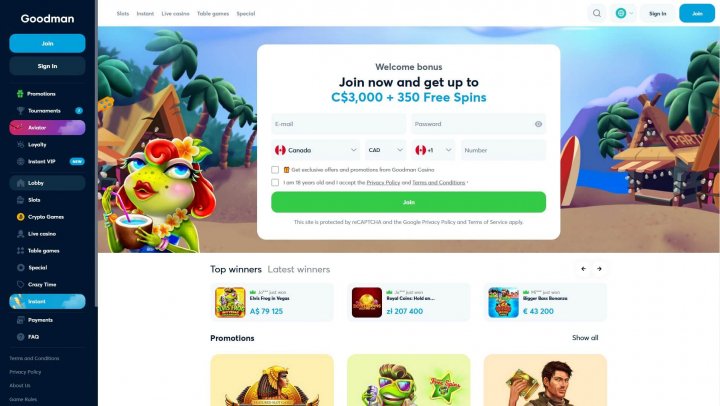
Navigate to the footer of the Good Man Casino homepage and locate the license information—operating company name and license number. Then go to the official website of that regulatory authority, separately, and examine its public licensee register with those precise details. Verify that the license status shows active and that the company name aligns with the one that processes your payments. This independent check requires just a few minutes and demonstrates the license is real.
What are the consequences of playing at an unlicensed online casino?
You encounter severe risks: total loss of your deposits with no legal way to retrieve them. Unlicensed operators often delay or flat-out deny withdrawals, offer rigged games that fail to pay fairly, and may leak your personal and financial data. There’s no regulator to intervene and resolve, and operators can disappear overnight. The short-term appeal of a bigger bonus is never equal to those permanent consequences.
Does a license mean the games are fair and random?
Yes. A valid license means independent test labs have approved the casino’s random number generators and game outcomes for fairness. Regulators also require ongoing audits to confirm that the advertised return-to-player rates stay consistent over millions of game rounds. No system is flawless, but licensed games are far more dependable than those on unregulated platforms where payouts can be manipulated with zero external oversight.
We’ve explored the complete architecture of casino licensing, from its fundamental principles to the practical steps any user can use to check a platform’s legitimacy. The license is the best signal of whether an operator will manage your money, data, and time with true respect. In the Swiss market, where high standards are the norm, settling for anything less than a confirmed and enforced license is an needless gamble piled onto the games themselves. We encourage every player to transform license checks into a non-negotiable habit, transforming online gaming from a leap of faith into a measured, protected choice.